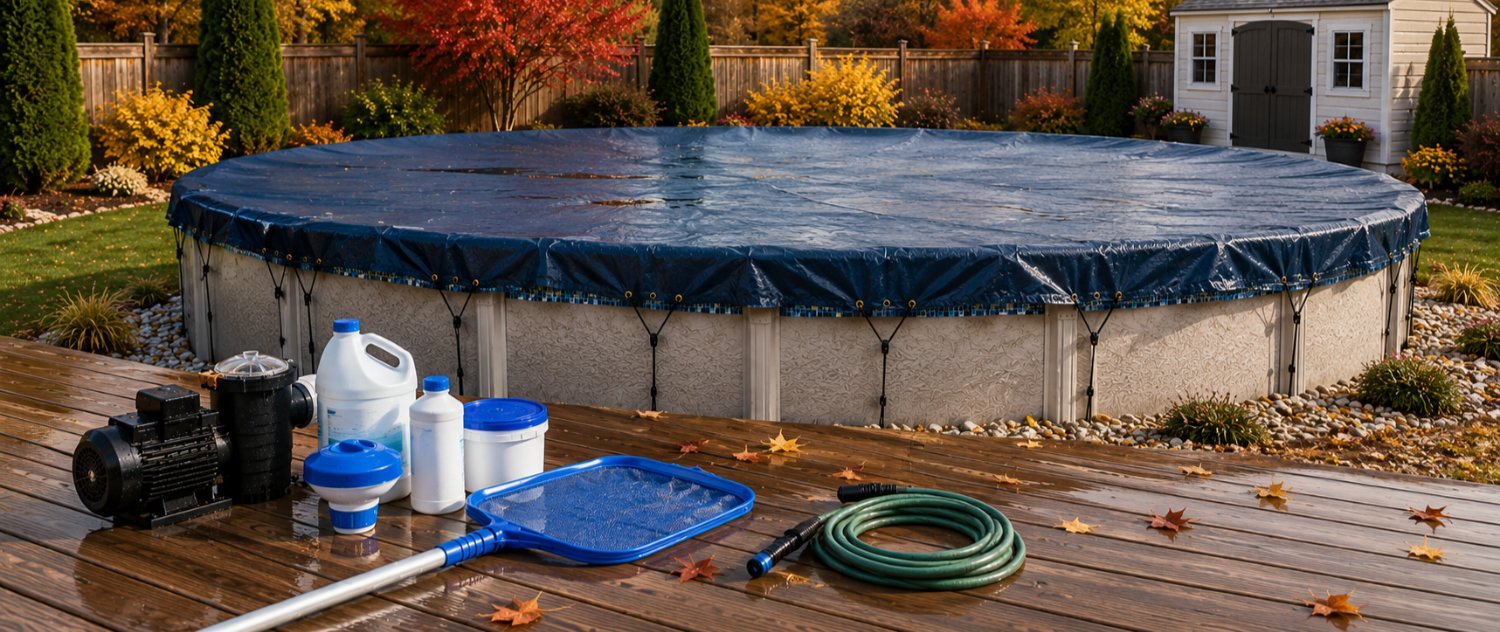
Pool Closing Guide
How to winterize your pool properly and protect it during the off-season.
Closing your pool properly protects it during winter and makes spring opening much easier. Whether you own an above-ground or in-ground pool, winterizing your pool helps prevent freeze damage, algae growth, and costly repairs.
When to Close Your Pool
Wait until water temperatures consistently drop below 65°F before closing the pool.
Closing too early can encourage algae growth while the water is still warm. In colder climates, most pools are closed between September and November depending on weather conditions.
Pool Closing Checklist
1. Clean the Pool Thoroughly
Before winterizing, remove as much dirt and debris as possible.
- Skim leaves and floating debris
- Vacuum the pool floor
- Brush walls and steps
- Empty skimmer and pump baskets
Leaving debris in the pool over winter can stain surfaces and create algae problems when spring arrives.
2. Balance the Water Chemistry
Balanced water helps protect pool surfaces and equipment during the off-season.
- pH
- Chlorine
- Total Alkalinity
- Calcium Hardness
Recommended Closing Levels
- pH: 7.2–7.6
- Alkalinity: 80–120 ppm
- Chlorine: Slightly elevated before closing
Proper water balance reduces corrosion, staining, and scale buildup during winter.
3. Shock the Pool
Add pool shock approximately 24 hours before shutting down the circulation system.
This destroys contaminants and helps prevent algae growth under the winter cover.
Run the pump continuously during this process.
4. Lower the Water Level
The proper water level depends on your pool type and cover system.
- Most above-ground pools are lowered slightly below the skimmer.
- Some in-ground pools require different water levels depending on the cover used.
Never completely drain a vinyl liner pool unless specifically instructed by the manufacturer or a pool professional.
5. Drain and Protect Equipment
Water left inside equipment can freeze and crack expensive components.
Drain water from:
- Pump
- Filter
- Heater
- Chlorinator
- Hoses and plumbing lines
Store drain plugs in a safe location so they are easy to find in spring.
6. Backwash and Clean the Filter
Clean the filter thoroughly before winter storage.
Sand Filters
- Backwash completely
- Rinse the filter
- Set the valve to the winter position if applicable
Cartridge Filters
- Remove cartridges
- Clean thoroughly
- Store indoors if possible
7. Add Winter Chemicals
Many pool owners use winterizing kits that include specialized chemicals designed for long-term protection.
- Winter algaecide
- Stain and scale preventer
- Winter shock treatment
Always follow product directions carefully.
8. Install Winter Plugs and Accessories
Protect skimmers, returns, and plumbing openings before covering the pool.
- Return plugs
- Skimmer protection devices
- Air pillows for above-ground pools
These accessories help reduce damage caused by ice expansion.
9. Cover the Pool Securely
Install the winter cover tightly to keep out sunlight, debris, and contaminants.
- Inspect cover cables and winches
- Check water bags or anchors
- Remove sharp objects that may damage the cover
Throughout winter, periodically remove leaves and standing water from the cover.
Above-Ground Pool Closing Tips
Use an Air Pillow
An air pillow placed beneath the winter cover helps absorb ice pressure and encourages rainwater runoff toward the edges of the cover.
Protect Flexible Hoses
Above-ground pool hoses can become brittle during freezing weather.
Disconnect and store flexible hoses indoors whenever possible.
Monitor Snow and Ice Loads
Heavy snow accumulation can place excessive stress on the winter cover and top rails.
Remove large snow accumulations carefully to avoid damage.
Common Pool Closing Mistakes
Closing Too Early
Warm water promotes algae growth under the cover, creating extra work during spring opening.
Leaving Water in Equipment
Frozen water expands and can crack pumps, filters, heaters, and plumbing.
Poor Water Balance
Unbalanced water can stain liners, damage pool surfaces, and contribute to scale buildup.
Using a Damaged Cover
Weak or improperly secured covers allow debris and sunlight into the pool, increasing maintenance when reopening.
Pool Closing Supplies Checklist
- Pool shock
- Winter algaecide
- Winter cover
- Air pillow
- Cover cable or water tubes
- Winter plugs
- Pool antifreeze (if needed)
- Cover pump
Final Thoughts
A proper pool closing protects your investment and makes spring opening faster and easier. Clean water, protected equipment, and a secure winter cover can prevent many common off-season problems and help ensure a smooth start to the next swimming season.