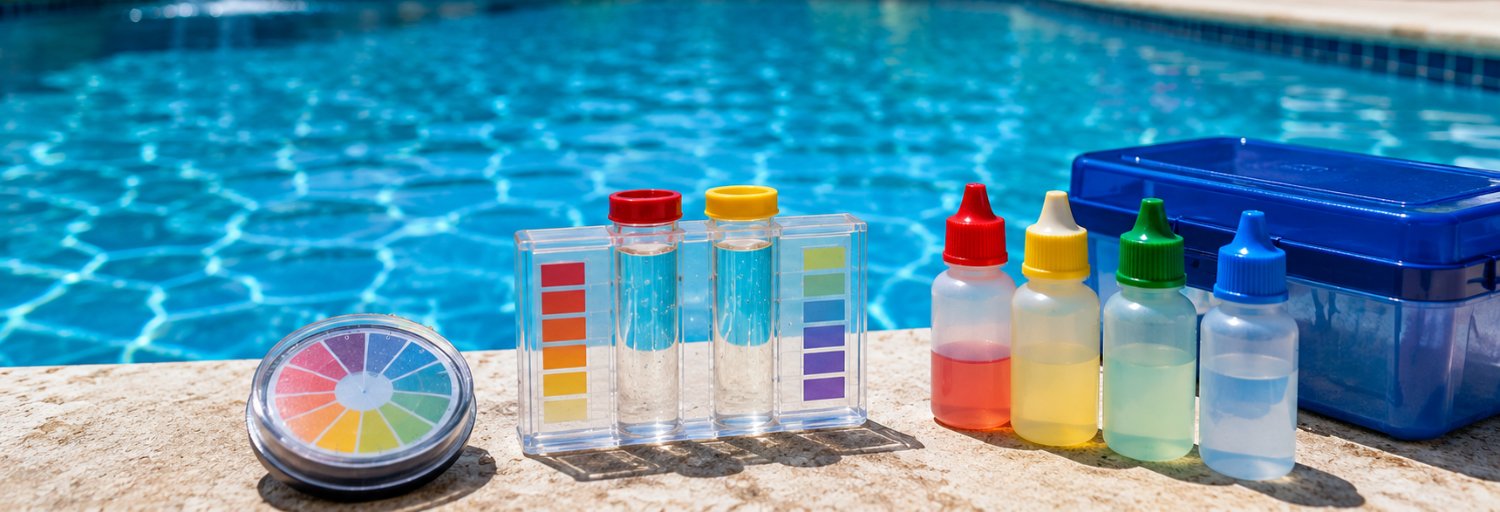
Pool Water Chemistry Explained: Understanding pH, Chlorine, Alkalinity, and Water Balance
Pool water chemistry can sound complicated at first, but the goal is simple: keep the water balanced, comfortable, and easier to maintain.
What Is Pool Water Chemistry?
Pool water chemistry refers to the balance of chemicals and minerals in the water.
The most important areas include:
- Sanitizer levels
- pH
- Alkalinity
- Calcium hardness
- Stabilizer levels
These work together as a system. Changing one part of the chemistry can affect the others.
Why Water Balance Matters
Balanced water helps chlorine sanitize effectively, reduce algae growth, improve swimmer comfort, prevent cloudy water, and protect pool equipment and surfaces.
Poor water balance can shorten the life of liners, heaters, pumps, filters, and pool finishes.
Understanding Chlorine
Chlorine is the most common sanitizer used in residential pools.
Its main job is to help control:
- Bacteria
- Algae
- Contaminants
- Organic waste
Without enough sanitizer, pool water can quickly become unsafe or develop algae growth.
Free Chlorine vs Total Chlorine
Free Chlorine
Free chlorine is the active sanitizer available to clean the water.
Total Chlorine
Total chlorine includes both active chlorine and chlorine that has already reacted with contaminants.
If total chlorine becomes much higher than free chlorine, the pool may need additional treatment.
Understanding pH
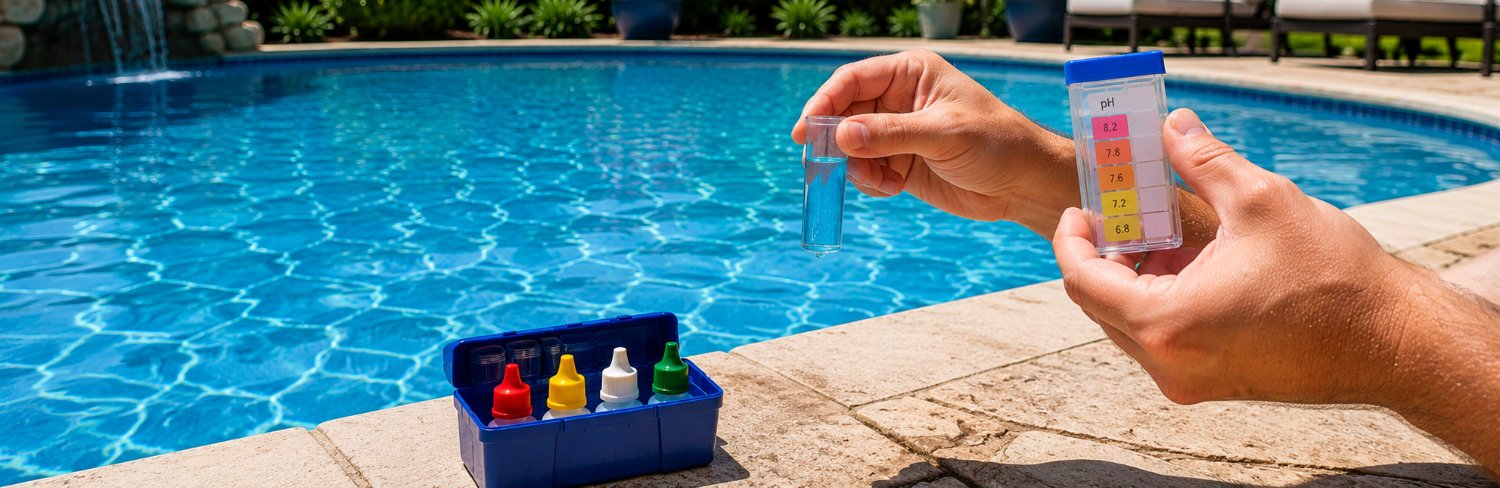
pH measures how acidic or basic the pool water is. Lower pH numbers are more acidic, while higher numbers are more basic.
For most residential pools, a good everyday pH range is usually 7.2 to 7.6.
If pH Is Too Low
- Water may irritate skin and eyes.
- Metal parts may corrode faster.
- Liners and surfaces may wear more quickly.
If pH Is Too High
- Chlorine becomes less effective.
- Water may turn cloudy.
- Scale may form on surfaces and equipment.
What Total Alkalinity Does
Total alkalinity helps stabilize pH levels. Think of alkalinity as a buffer that helps prevent rapid pH swings.
A common target range for total alkalinity is 80 to 120 ppm.
Low Alkalinity
- pH may become unstable.
- Water chemistry may change quickly.
- Water may become more corrosive.
High Alkalinity
- pH may be harder to adjust.
- Cloudy water may become more likely.
- Scale may form more easily.
Calcium Hardness Explained
Calcium hardness measures dissolved calcium in the water. Pools need some calcium, especially plaster and concrete pools, but too much can create problems.
A common calcium hardness range is about 200 to 400 ppm, depending on pool type and product guidance.
Low Calcium Hardness
Water with very low calcium may become aggressive and slowly pull minerals from pool surfaces.
High Calcium Hardness
- Scale buildup may develop.
- Water may look cloudy.
- Pool surfaces may feel rough.
- Equipment may become harder to maintain.
What Is Cyanuric Acid?
Cyanuric acid, often called stabilizer or conditioner, helps protect chlorine from being destroyed too quickly by sunlight.
Too Little Stabilizer
Chlorine may disappear rapidly on sunny days.
Too Much Stabilizer
Chlorine may become less effective, even when test results show chlorine is present.
Why Pool Chemicals Affect Each Other
Pool chemistry is connected. High pH can reduce chlorine efficiency. High alkalinity can make pH harder to adjust. Stabilizer affects chlorine performance, and calcium hardness influences scaling risk.
That is why pool chemistry should be viewed as an overall water balance, not just one number at a time.
Testing Pool Chemistry
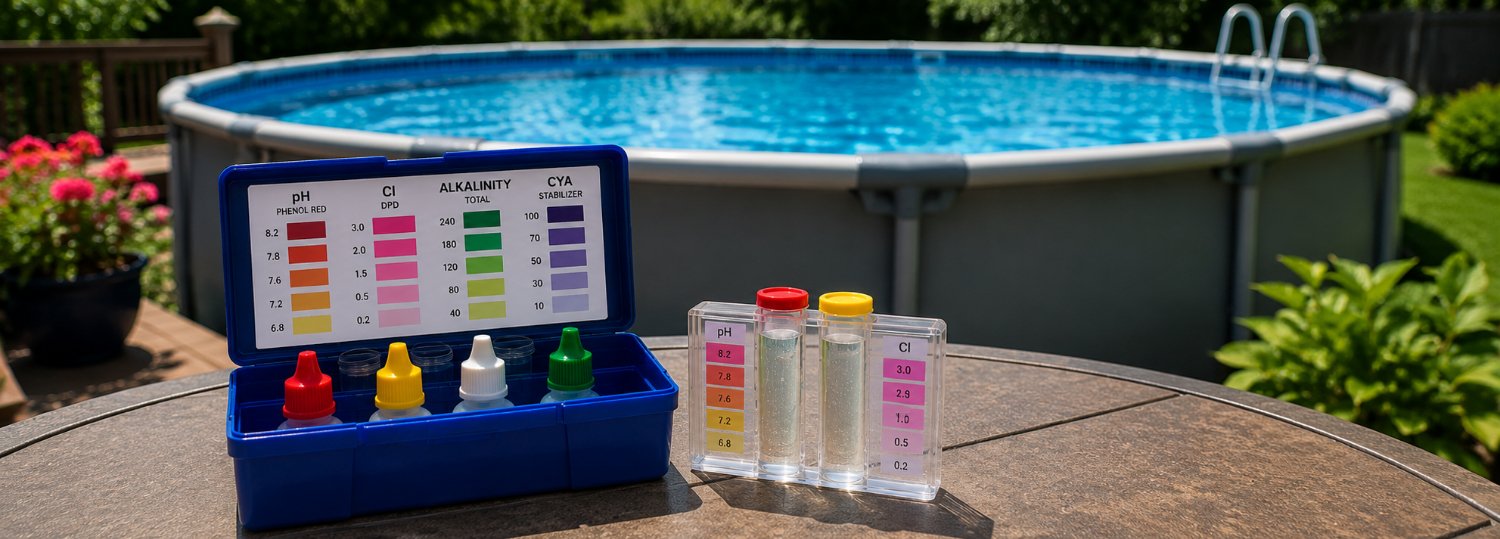
Different testing methods may produce slightly different results. Common options include test strips, liquid test kits, digital testers, and professional pool store testing.
Professional testing can be helpful for calcium hardness, stabilizer, metals, and other detailed readings.
How Weather Affects Pool Chemistry
Hot Weather
- Chlorine gets used faster.
- Algae can grow more easily.
- Evaporation increases.
Rain
- Chemicals may become diluted.
- pH may change.
- Dirt and debris may enter the pool.
Heavy Pool Use
- Chlorine demand increases.
- Oils and contaminants enter the water.
- Water clarity may change.
Saltwater Pool Chemistry
Saltwater pools still use chlorine. The difference is that a salt chlorine generator creates chlorine from dissolved salt in the water.
Saltwater pools still require pH control, alkalinity balance, stabilizer monitoring, and calcium hardness testing.
Common Signs Water Chemistry Is Out of Balance
- Cloudy water.
- Algae growth.
- Strong chlorine smell.
- Eye irritation.
- Scaling.
- Stains.
- Dull-looking water.
- Rapid chlorine loss.
Pool Water Chemistry FAQs
What is the most important pool chemistry number?
Chlorine and pH are usually the first numbers to check. Chlorine helps sanitize the water, while pH affects comfort and how well chlorine works.
Can pool water look clear but still be unbalanced?
Yes. Clear water can still have low sanitizer, high pH, poor alkalinity, or other chemistry issues. Testing is the only reliable way to know.
Is saltwater pool chemistry easier?
Saltwater pools can feel easier for some owners, but they still need regular testing and balancing.
Why do my pool test results keep changing?
Sunlight, rain, swimmer use, temperature, chemical additions, and filtration can all affect test results. Regular testing helps you notice patterns.
Updated May 2026