Pool Water Care Basics: How to Keep Your Pool Clear and Balanced
Clean, clear pool water does not happen by accident. It comes from a simple routine: testing the water, keeping chlorine and pH in the right range, running the filter, and treating problems before they get worse.
Why Pool Water Care Matters
Good pool water care keeps your swimming pool safer, more comfortable, and easier to maintain. Clear water also helps you see the bottom of the pool, spot problems early, and enjoy the pool without cloudy water, algae, strong odors, or eye irritation.
For most pool owners, the basics come down to three things: proper sanitizer, balanced pH, and good circulation through the filter system.

The 3 Basics of Healthy Pool Water
1. Chlorine Keeps the Water Sanitized
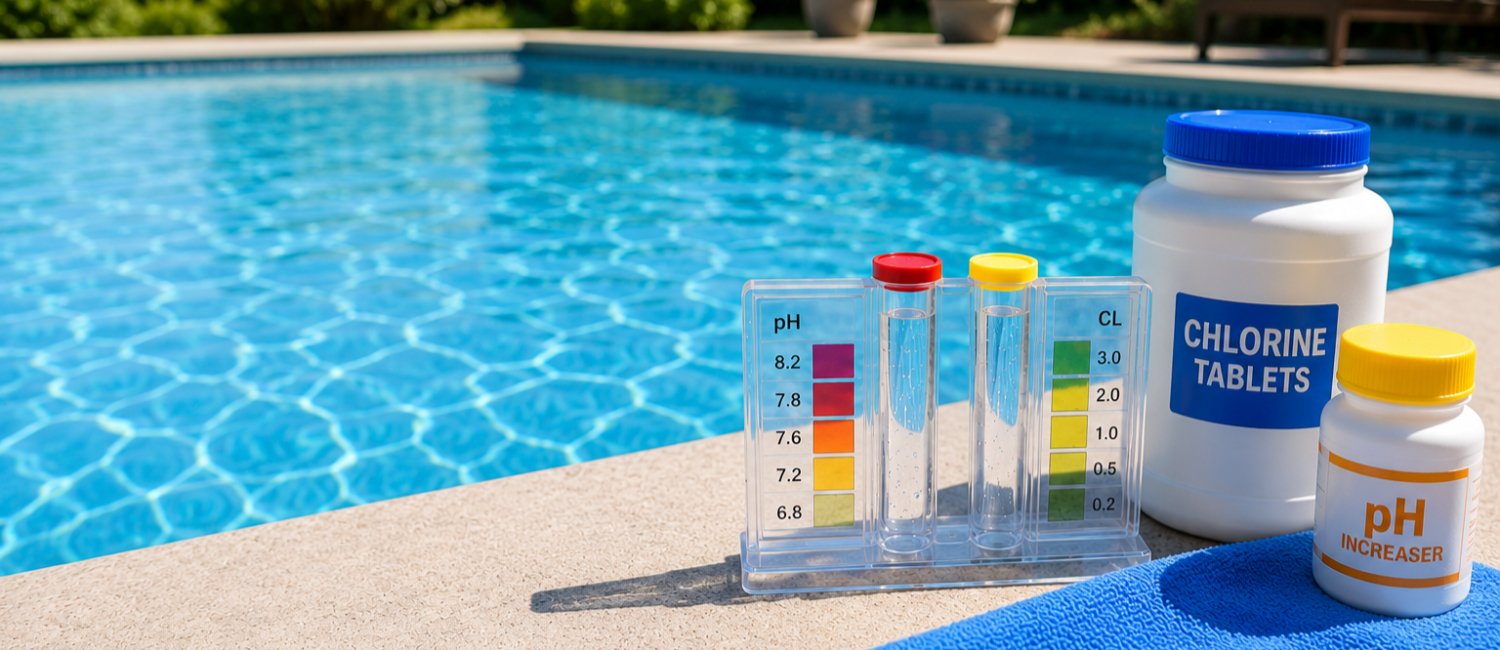
Chlorine is the most common pool sanitizer. Its job is to help kill germs, bacteria, and algae that can grow in pool water. For a typical residential pool, keep free chlorine at least 1 ppm. Many pool owners aim for about 1–3 ppm during normal use, depending on sunlight, swimmer load, water temperature, and product label directions.
2. pH Controls Comfort and Chlorine Performance
pH measures how acidic or basic the water is. When pH is too low, the water can irritate skin and eyes and may be harder on pool parts. When pH is too high, chlorine becomes less effective and the water may turn cloudy.
A good everyday target for pool pH is usually between 7.2 and 7.6, although some public-health guidance allows a slightly wider range. Always follow the instructions on your test kit and chemical labels.
3. Filtration Removes Dirt and Debris
Your pool filter removes suspended particles, dirt, leaves, oils, and other debris from the water. A filter helps keep the water clear, but it does not replace chlorine or other sanitizers. Filtration and proper chemical balance work together.
Recommended Pool Water Levels
Use the table below as a beginner-friendly starting point. Your pool type, sanitizer, local water, and product instructions may require adjustments.
| Pool Water Test | Recommended Range | Purpose |
|---|---|---|
| Free Chlorine | 1–3 ppm | Keeps water sanitized and helps prevent algae |
| pH | 7.2–7.6 | Improves comfort and chlorine performance |
| Total Alkalinity | 80–120 ppm | Helps stabilize pH levels |
| Calcium Hardness | 200–400 ppm | Helps prevent scaling and surface damage |
How Often Should You Test Pool Water?
Test chlorine and pH regularly during pool season. In hot weather, after heavy swimming, after rain, or when the water looks cloudy, test more often.
You can use test strips, a liquid test kit, or take a water sample to a local pool store. Professional testing at the beginning of the season is helpful because it gives you a better picture of your overall water balance.
How to Add Pool Chemicals Safely
Always read and follow the label on every pool chemical. Never mix chemicals together. Add chemicals to the pool water as directed, and keep the pump running to help circulate the water.
- Add chemicals slowly and carefully.
- Keep children and pets away from pool chemicals.
- Store chemicals in a cool, dry, well-ventilated area.
- Do not swim until the water is properly balanced and safe according to the product label.
When Should You Shock a Pool?
Pool shock is a stronger chlorine treatment used to help clear up water problems and restore sanitizer strength. Many pool owners shock the pool after heavy use, after a storm, when algae appears, or when the water starts to look dull or cloudy.
After shocking the pool, do not swim until the chlorine level has returned to a safe range. Check your test kit and product label before using the pool again.
How to Prevent Algae in Pool Water
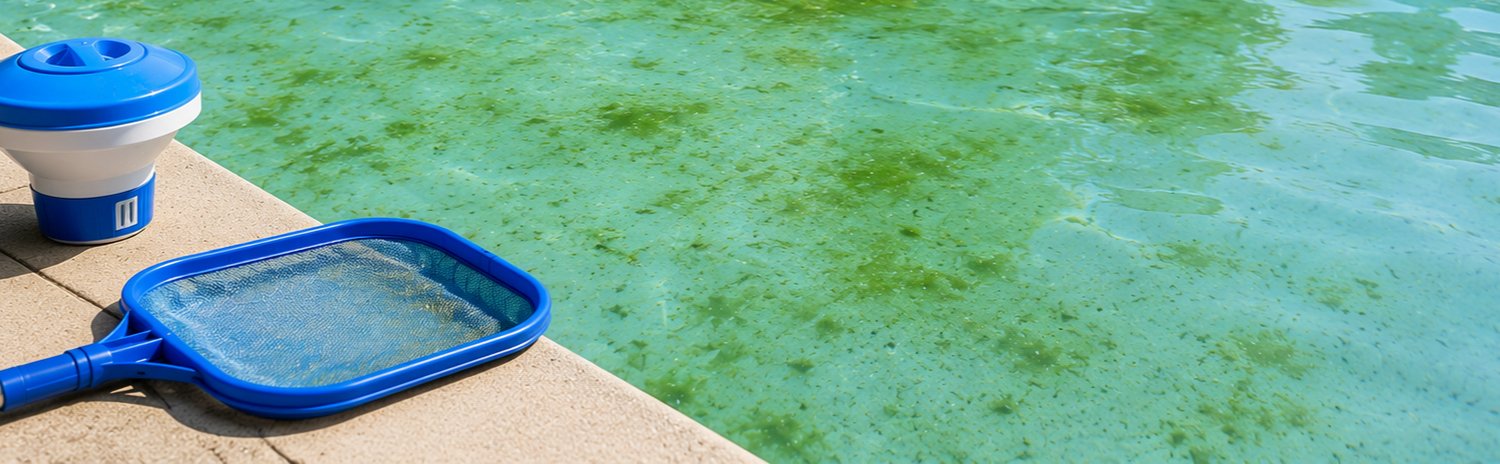
Algae can grow quickly when chlorine is low, circulation is poor, or the pool is not brushed regularly. The best way to prevent algae is to stay ahead of it with a simple routine.
- Keep chlorine in the proper range.
- Brush pool walls, steps, corners, and behind ladders.
- Run the filter long enough each day for good circulation.
- Vacuum dirt and debris from the bottom of the pool.
- Use algaecide only as directed by the product label.
What Causes Cloudy Pool Water?
Cloudy pool water is usually a sign that something is out of balance. Common causes include low chlorine, high pH, poor filtration, heavy swimmer use, rain, dirt, pollen, or undissolved chemicals.
Start by testing chlorine and pH. Then check that the pump and filter are working properly. If the pool is still cloudy, clean or backwash the filter and continue testing until the water returns to normal.
Hard Water, Iron, and Well Water Problems
Some pools have hard water or water with iron and minerals, especially when filled from a well. These minerals can react with chlorine and may cause staining, cloudy water, or reduced sanitizer performance.
If you use well water or notice staining, have the water tested before adding large amounts of chlorine. A pool store can help identify metals, hardness, and the right treatment product.
Simple Pool Water Care Checklist
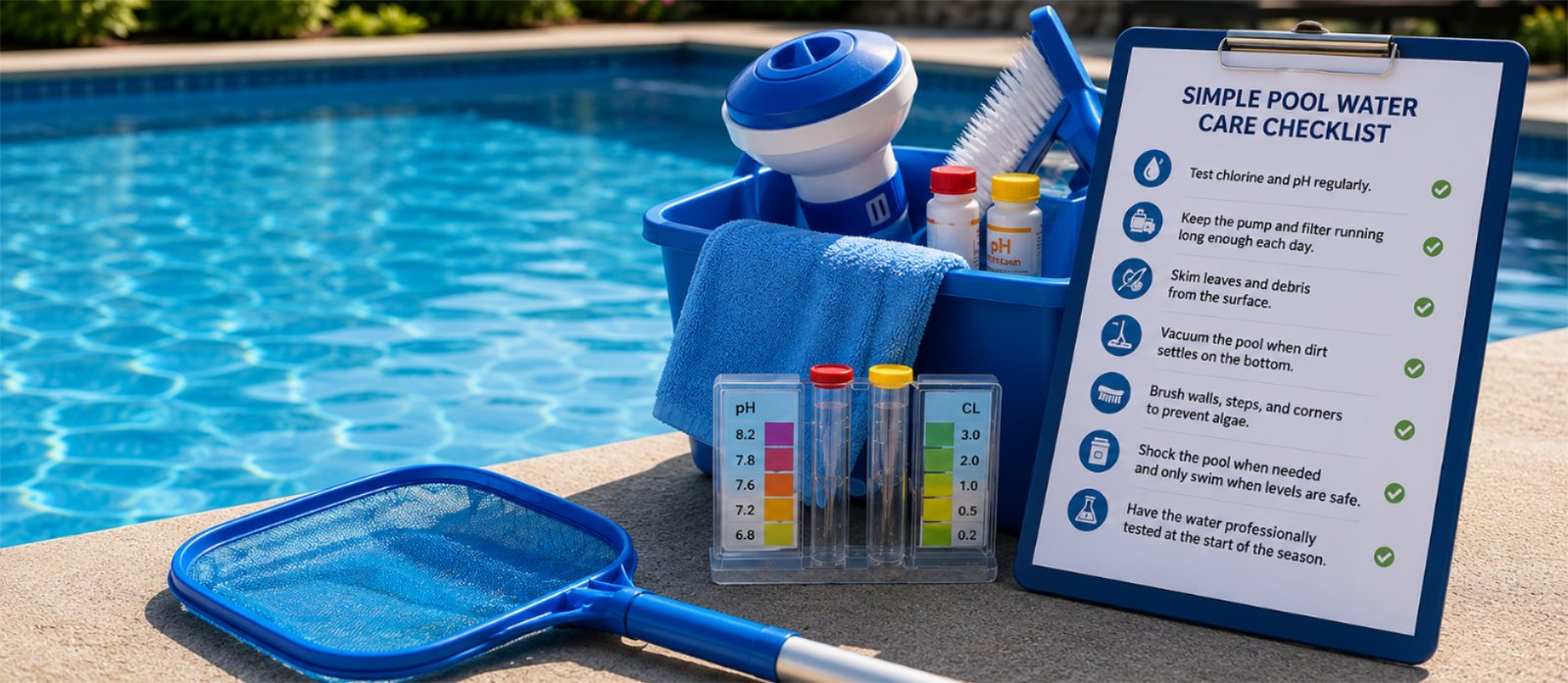
- Test chlorine and pH regularly.
- Keep the pump and filter running long enough each day.
- Skim leaves and debris from the surface.
- Vacuum the pool when dirt settles on the bottom.
- Brush walls, steps, and corners to prevent algae.
- Shock the pool when needed and only swim when levels are safe.
- Have the water professionally tested at the start of the season.
Pool Water Safety Reminders
Clear water is only one part of pool safety. Above ground pools are not designed for diving or jumping. Children should always be supervised by an adult, and no one should swim alone.
Pool Water Care FAQs
What are the most important pool water tests for beginners?
Chlorine and pH are the two most important tests to learn first. Chlorine helps sanitize the water, and pH affects swimmer comfort and how well chlorine works.
Why does my pool smell strongly like chlorine?
A strong chlorine smell does not always mean there is too much good chlorine in the pool. It can be a sign that the water needs testing and may need adjustment or shocking.
Can a pool be clear but still unsafe?
Yes. Water can look clear and still have low sanitizer or poor balance. Always test the water instead of relying only on appearance.
Should I test my pool after heavy rain?
Yes. Rain can dilute chlorine, affect pH, and bring dirt or debris into the pool. Test the water after heavy rain and adjust as needed.
Updated May 2026