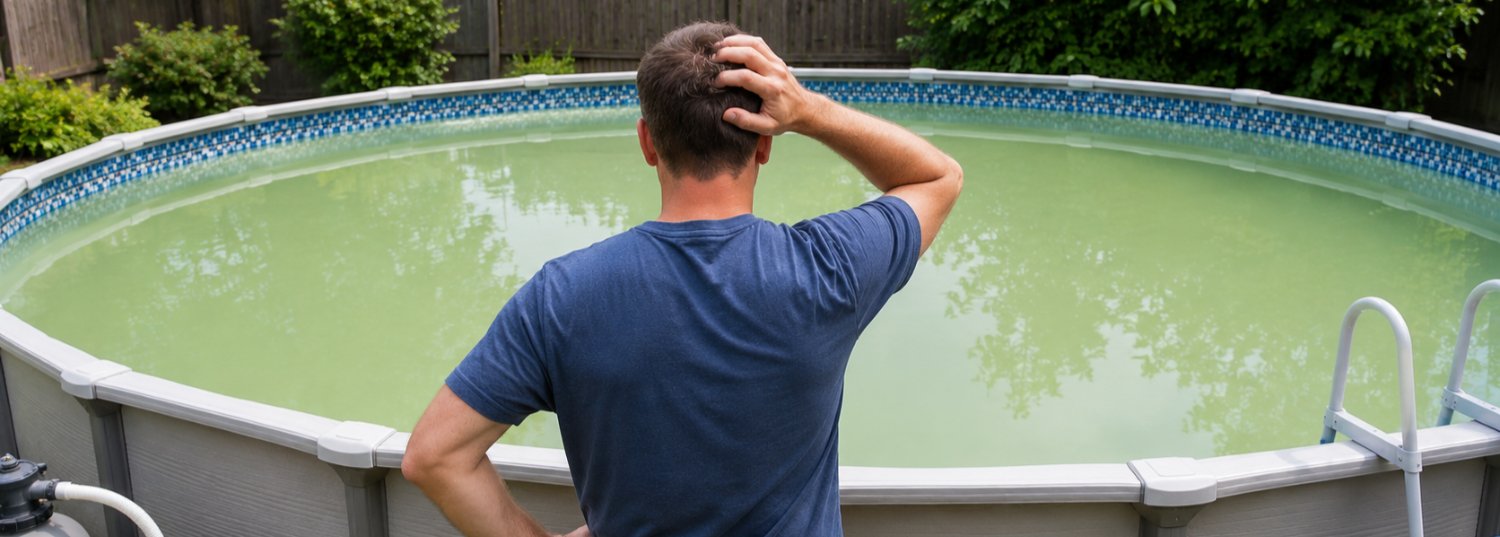
Pool Troubleshooting: Fix Cloudy Water, Algae, and Common Pool Problems Fast
Pool problems can show up quickly. One day the water looks fine, and the next day it may be cloudy, green, smelly, stained, or poorly circulating. This guide helps you identify the problem and take the right next step.
Start With the Symptom
The fastest way to troubleshoot a pool is to look at what changed. Is the water cloudy? Did it turn green? Does it smell strongly like chlorine? Is the pump weak? Each symptom points to a different likely cause.
In most cases, pool problems come from low sanitizer, poor circulation, dirty filtration, water balance issues, or debris left in the pool too long.
Cloudy Pool Water
Cloudy pool water is one of the most common signs that something is out of balance. The water may look dull, hazy, or milky instead of clear.
Common Causes
- Low chlorine.
- Dirty or clogged filter.
- Poor water circulation.
- Heavy swimmer use.
- Fine debris after rain or storms.
- Early algae growth.
How to Fix It
- Test chlorine and pH first.
- Clean or backwash the filter.
- Run the pump longer until the water improves.
- Brush walls, steps, and corners.
- Shock the pool if chlorine is low or algae may be starting.
- Use clarifier only if fine particles remain suspended in the water.
Green Pool Water
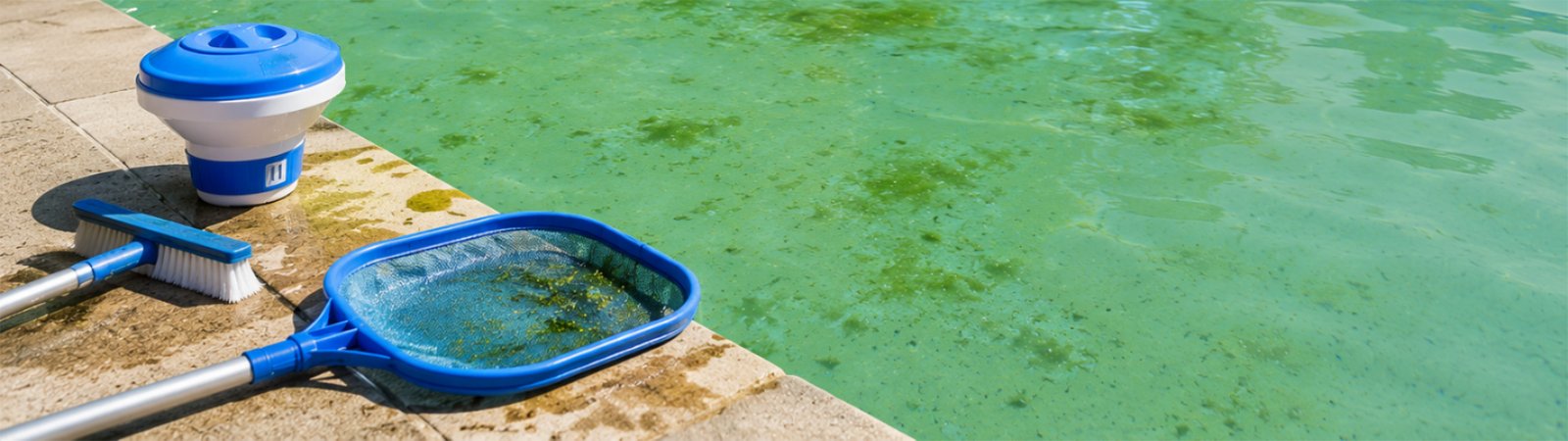
Green pool water usually means algae is growing. This often happens when chlorine drops too low, especially during hot weather, after heavy rain, or when the pump has not been running long enough.
How to Fix a Green Pool
- Brush the entire pool to loosen algae from surfaces.
- Shock the pool according to the product label.
- Run the filter continuously during cleanup.
- Vacuum dead algae from the pool floor.
- Clean the filter frequently until the water clears.
A light algae problem may improve quickly, but a severe green pool can take several days to fully clear.
Mustard or Yellow Algae
Mustard algae usually appears as yellow or dusty patches on shady walls, steps, corners, or behind ladders. It can be stubborn and may return if the treatment is too weak.
What to Do
- Brush affected areas aggressively.
- Clean ladders, pool toys, floats, and tools.
- Shock the pool with an algae-focused treatment.
- Keep chlorine levels steady after treatment.
Black Algae Spots
Black algae looks like dark spots on pool surfaces. It is more common in plaster or concrete pools because it can attach deeply to rough surfaces.
How to Remove Black Algae
- Scrub the spots with a stiff pool brush.
- Break the protective outer layer of the algae.
- Apply the proper chlorine treatment as directed.
- Keep brushing until the spots are gone.
Strong Chlorine Smell
A strong chlorine smell does not always mean there is too much chlorine. Often, it means the chlorine has combined with sweat, sunscreen, body oils, and other contaminants.
How to Fix It
- Test the water.
- Shock the pool if needed.
- Run the pump to improve circulation.
- Keep chlorine and pH in the proper range.
Pool Water Burns Eyes
Burning eyes are often caused by poor water balance, especially pH that is too high or too low. Chloramines can also make the water uncomfortable.
What to Check
- pH level.
- Free chlorine.
- Total alkalinity.
- Overall water cleanliness.
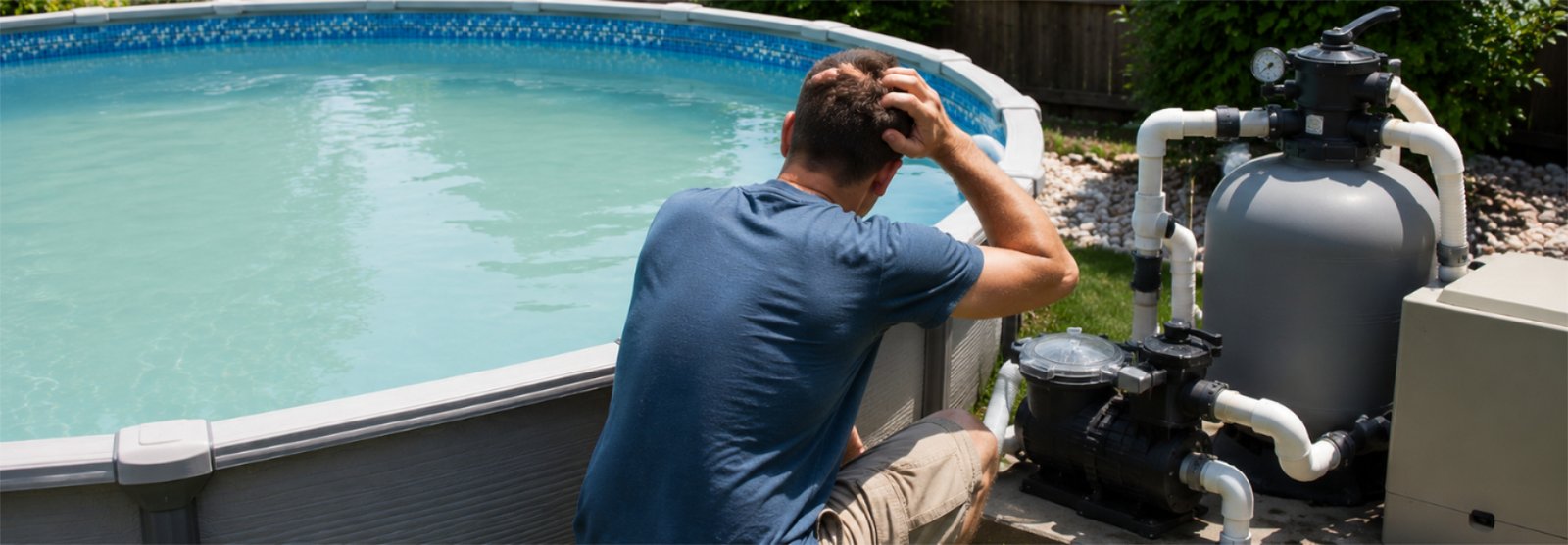
Pool Pump Not Circulating Properly
Poor circulation can cause cloudy water, algae growth, debris buildup, and weak skimmer action. If the water is not moving well, the filter cannot do its job.
What to Check First
- Empty the skimmer basket.
- Empty the pump basket.
- Check the filter pressure.
- Clean or backwash the filter.
- Look for air bubbles or possible air leaks.
- Make sure return jets are moving water around the pool.
Pool Water Level Keeps Dropping
Some water loss is normal from evaporation and splash-out, especially in hot weather. But if the water level drops quickly, there may be a leak.
Simple Bucket Test
- Fill a bucket with pool water.
- Place it on a pool step.
- Mark the water level inside the bucket and on the pool wall.
- Check both levels after 24 hours.
If the pool loses noticeably more water than the bucket, a leak may be possible.
Brown or Rust Pool Stains
Brown, orange, or rust-colored stains may come from leaves, dirt, iron, metals, or well water. The right fix depends on what caused the stain.
What to Try
- Brush the stained area.
- Remove leaves and debris quickly.
- Shock the pool if the stain is organic.
- Have the water tested for metals if stains return.
- Use a pool stain remover only as directed by the label.
Pool Troubleshooting Checklist
When something looks wrong, start with the basics before adding more chemicals than needed.
- Test chlorine and pH.
- Check pump and filter operation.
- Clean baskets and filter media.
- Brush walls, steps, corners, and ladders.
- Vacuum dirt and dead algae.
- Shock the pool when needed.
- Run the pump longer during cleanup.
- Retest the water after treatment.
Pool Troubleshooting FAQs
Why did my pool turn cloudy overnight?
Cloudy water can appear overnight after heavy swimming, rain, low chlorine, poor filtration, or early algae growth. Test the water first, then check the filter and circulation.
Can I swim in a cloudy pool?
It is better not to swim if the water is very cloudy. Cloudy water can make it harder to see the bottom and may indicate poor sanitizer levels.
Why does algae keep coming back?
Algae often returns when chlorine drops too low, brushing is inconsistent, circulation is weak, or algae remains on ladders, toys, steps, and corners.
Should I shock the pool every time there is a problem?
Not always. Test the water first. Shock is useful for algae, chloramines, and some cloudy water problems, but poor filtration or high pH may need a different fix.
Updated May 2026